Site Development & Land
Mass Grading and Earthwork Plan
Engineered grading plans and cut and fill calculations for large sites, pads and land development. Typical US fees run $3,000 to $50,000, and most projects take 2 to 8 weeks. Our drawings, calculations and reports are sealed by a Professional Engineer (PE) licensed in the state where your project is located, ready for permit submission.
What the work involves
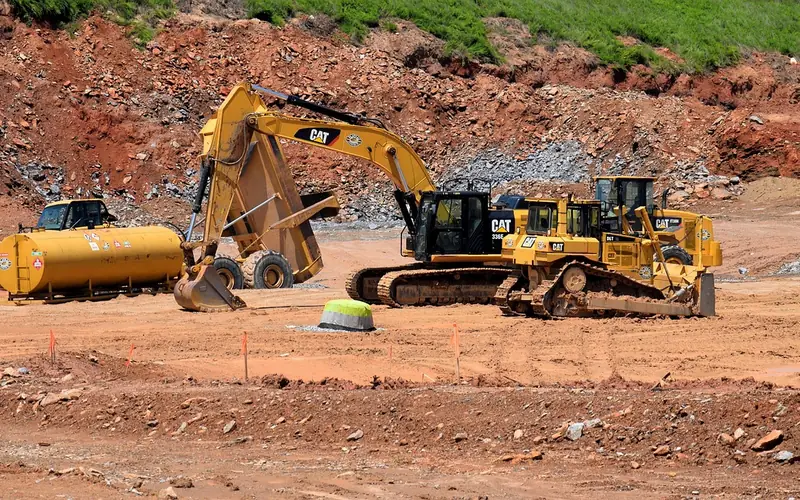
A grading plan sets finished elevations for building pads, roads and lots, balances cut and fill, and routes drainage. The engineer computes earthwork quantities, specifies compaction requirements with the geotechnical engineer, and prepares erosion control phasing. Most jurisdictions require a grading permit above certain volumes of earth moved or disturbed area.
When you need it
- Moving large volumes of soil for building pads or lots
- Site exceeds the local grading permit threshold (often measured in cubic yards)
- Importing or exporting fill
- Creating level pads on sloping land
- Contractor needs earthwork quantities for bidding
What you receive
- Grading plan with spot elevations and contours
- Cut and fill quantity report
- Compaction and fill specifications
- Erosion control phasing plan
What drives the cost
Estimate. Scales with site size and complexity; small pads are a few thousand dollars and large developments much more. HomeAdvisor's $65 to $200 per hour civil rate applies to hourly work.
Related calculators
Frequently asked questions
How much does mass Grading and Earthwork Plan cost?
Across the US, mass Grading and Earthwork Plan usually costs $3,000 to $50,000. Estimate. Scales with site size and complexity; small pads are a few thousand dollars and large developments much more. HomeAdvisor's $65 to $200 per hour civil rate applies to hourly work.
How long does mass Grading and Earthwork Plan take?
Plan on 2 to 8 weeks from signed proposal to stamped deliverables, longer if a site visit, soil testing or a permit review cycle is involved.
Do I need a licensed PE for mass Grading and Earthwork Plan?
In most US jurisdictions, yes. When the work needs a permit, the plans, calculations or report usually must be sealed by a Professional Engineer licensed in the state where the project is located. Every deliverable we issue for permit is sealed that way.
Will I also need a geotechnical engineer?
Sometimes. Depending on the site, mass Grading and Earthwork Plan can also involve a geotechnical engineer, land surveyor or earthwork contractor. We tell you up front which other professionals your project needs and coordinate with them so the drawings agree.
Who do you provide mass Grading and Earthwork Plan for?
Most of our clients for this service are developers, contractors and municipalitys. Describe your project and one of our engineers will reply with scope, fee and schedule.
When do I need a grading permit?
Thresholds vary. Many jurisdictions require one above a set volume of cut or fill or a set disturbed area, and nearly all require one for work in slopes or near waterways.
What does balancing a site mean?
Designing grades so cut material is reused as fill on site, reducing costly import or export of soil. Hauling soil is expensive, so a balanced site can save significant construction cost.
Who certifies compacted fill?
A geotechnical engineer or testing lab tests compaction during construction and issues a report. Those reports are often required before building foundations are placed on the fill.
Is erosion control part of the grading plan?
Usually yes, and sites disturbing 1 acre or more typically also need a NPDES construction stormwater permit and SWPPP. Local grading ordinances may require erosion controls on smaller sites as well.
Where we provide this service
 Alabama
 Alaska
 Arizona
 Arkansas
 California
 Colorado
 Connecticut
 Delaware
 District of Columbia
 Florida
 Georgia
 Hawaii
 Idaho
Idaho Illinois
 Indiana
 Iowa
Iowa Kansas
 Kentucky
 Louisiana
 Maine
Maine Maryland
 Massachusetts
 Michigan
 Minnesota
 Mississippi
 Missouri
 Montana
 Nebraska
 Nevada
 New Hampshire
 New Jersey
 New Mexico
 New York
 North Carolina
 North Dakota
 Ohio
Ohio Oklahoma
 Oregon
 Pennsylvania
 Rhode Island
 South Carolina
 South Dakota
 Tennessee
 Texas
Texas Utah
Utah Vermont
 Virginia
 Washington
 West Virginia
 Wisconsin
 Wyoming