Water, Sewer & Septic
Lead Service Line Inventory and Replacement Program
Engineering support for water systems to inventory and replace lead service lines under EPA's lead rules. Typical US fees run $20,000 to $500,000 per program, and most projects take Months for inventory; years for replacement. Our team prepares the drawings, calculations and reports, and a Professional Engineer (PE) licensed in the state where your project is located reviews and seals them before they go to permit.
What the work involves
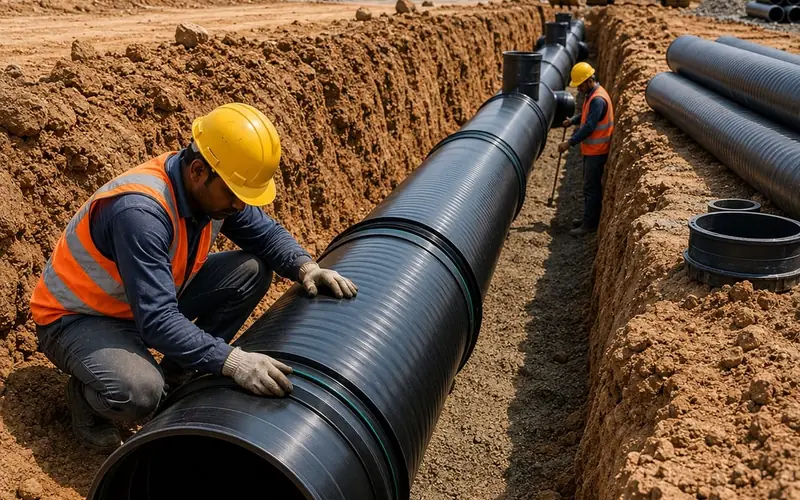
EPA's Lead and Copper Rule Improvements require community water systems to maintain service line inventories and replace lead and galvanized requiring replacement lines, generally within 10 years with limited exceptions. Engineers help build inventories from records and field verification, prioritize work, design replacement contracts, apply for funding and oversee construction.
When you need it
- Water system must update its service line inventory
- Planning a replacement program
- Applying for state revolving fund or other funding
- Construction oversight for replacements
What you receive
- Service line inventory
- Replacement plan and prioritization
- Construction documents
- Funding application support
- Construction oversight
What drives the cost
Estimate. Depends heavily on system size and number of unknown lines.
Frequently asked questions
How much does lead Service Line Inventory and Replacement Program cost?
Across the US, lead Service Line Inventory and Replacement Program usually costs $20,000 to $500,000 per program. Estimate. Depends heavily on system size and number of unknown lines.
How long does lead Service Line Inventory and Replacement Program take?
Plan on Months for inventory; years for replacement from signed proposal to stamped deliverables, longer if a site visit, soil testing or a permit review cycle is involved.
Do I need a licensed PE for lead Service Line Inventory and Replacement Program?
In most US jurisdictions, yes. When the work needs a permit, the plans, calculations or report usually must be sealed by a Professional Engineer licensed in the state where the project is located. Anything we prepare for permit goes to a PE licensed in that state, who reviews and seals it before you submit.
Will I also need a environmental engineer?
Sometimes. Depending on the site, lead Service Line Inventory and Replacement Program can also involve a environmental engineer, water utility or contractor. We tell you up front which other professionals your project needs and coordinate with them so the drawings agree.
Who do you provide lead Service Line Inventory and Replacement Program for?
This service is typically for municipalities. Describe your project and we will reply with scope, fee and schedule.
What does the rule require?
Under the Lead and Copper Rule Improvements, water systems must keep inventories and replace lead and galvanized requiring replacement service lines, generally within 10 years. Check EPA's current guidance, since compliance dates have been subject to change.
Who pays for replacement?
Systems use rates, state revolving fund money and other federal and state funding. Whether the customer pays any share depends on local policy and state law.
How do systems find unknown lines?
Through records review, field inspections, test pits, and customer self-reporting programs. Predictive models are increasingly used to prioritize field checks.
Does a homeowner need an engineer for this?
Usually not. Homeowners typically work with their utility's program or a licensed plumber.
Where we provide this service
 Alabama
 Alaska
 Arizona
 Arkansas
 California
 Colorado
 Connecticut
 Delaware
 District of Columbia
 Florida
 Georgia
 Hawaii
 Idaho
 Illinois
 Indiana
 Iowa
 Kansas
 Kentucky
 Louisiana
 Maine
 Maryland
 Massachusetts
 Michigan
 Minnesota
 Mississippi
 Missouri
 Montana
 Nebraska
 Nevada
 New Hampshire
 New Jersey
 New Mexico
 New York
 North Carolina
 North Dakota
 Ohio
 Oklahoma
 Oregon
 Pennsylvania
 Rhode Island
 South Carolina
 South Dakota
 Tennessee
 Texas
 Utah
 Vermont
 Virginia
 Washington
 West Virginia
 Wisconsin
 Wyoming